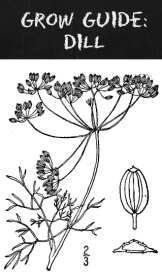
Summary:
Sow: Just before last frost, or in mid-October in zone 9A.
Soil: 1/2 sand & 1/2 potting mix or compost.
Bury seeds 1/4 inch deep in rows.
Water every other day in spring, every day in summer in zone 9A.
Harvest and make pickles or freeze for use over winter. HOW EASY IS THAT? You can grow it in a pot, or the ground, or wherever.
Dill is a beautiful plant with SO many uses. If you’re into pickles, you’ll want those big flower tops, what I’m after, maybe the fully formed seeds themselves, and of course the leaves. The stems also hold more flavor than you would expect! Chopped leaves go beautifully with salads, dressings, and on baked potatoes. Here’s how you can start enjoying dill straight from outside your door.
Dill can be planted just after the last spring frost, or here in the desert southwest, in mid-October. Dill plants have a single tap-root that needs plenty of depth. If you are growing them in a container, it should be at least 24 inches deep. Don’t bother starting them inside either, dill is a fussy transplant candidate.
There are two ways to plant dill seeds. Soil should be half sand, and half potting mix or compost. Moist soil is best for this method.  Plant 3-4 seeds in a single hole, 1/4-1/2 inch deep (1/2 cm works), and 12 inches apart. Moist soil is best for this method. I like to use an old ruler that I won’t mind getting dirty. Put your thumb at the appropriate mark and insert until your finger hits the top of the soil, rocking back and forth to create a divot. Gently put your seeds in and tap them down with the ruler’s corner if you feel they still aren’t resting at the correct depth. Pinch the soil to cover, don’t compress the soil on top of them. Be sure to pay attention because if you plant them too deep they may not sprout.
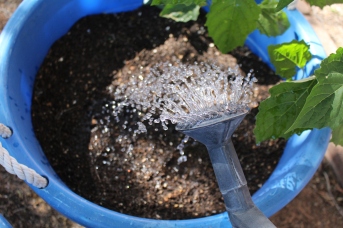 Water every other day, or every day in summer. But keep a close watch, check moisture. Currently mine are on a drip that runs every other day and they are loving it. Plants will bolt quickly in warm weather, so keep an eye on them and cut what you need as it grows!
Did you know? Parents would give their children dill heads to chew on in church to keep them occupied.
Pro tip: Large heads of dill freeze well, and if you are using them for pickles, some say the flavor is better after freezing.
It’s as simple as that. Finding a variety that’s been grown in your area for a while will enhance your growing success. But trusting the experts at your favorite seed company will also do just fine.
Happy growing!
 Pickles Of Wisdom